Those Small Holes in Your Teeth Might Not Be Cavities, They Might Be a Sleep Problem
Source:
Dr. Marketing
A small pit in a tooth can seem easy to explain. Maybe it is a cavity. Maybe the enamel is simply wearing down. But what if the real story begins somewhere completely different, perhaps with acid exposure, dry mouth, breathing patterns, or what happens while you sleep?
The appearance of the teeth can sometimes provide important clues about the conditions affecting the mouth. Certain patterns of erosion, thinning enamel, sensitivity, and unusual wear may encourage us to look beyond brushing and diet and consider factors such as reflux, nighttime mouth breathing, and sleep-disordered breathing.
At Elements Dental in Downtown Victoria, we believe these connections deserve attention. For individuals in Victoria, a whole-person approach to dentistry means looking beyond the visible damage to understand what may be contributing to it. In this blog, we explore why those small holes or worn areas may not always be cavities and what they could tell us about what is happening after you fall asleep.
What Patients Notice
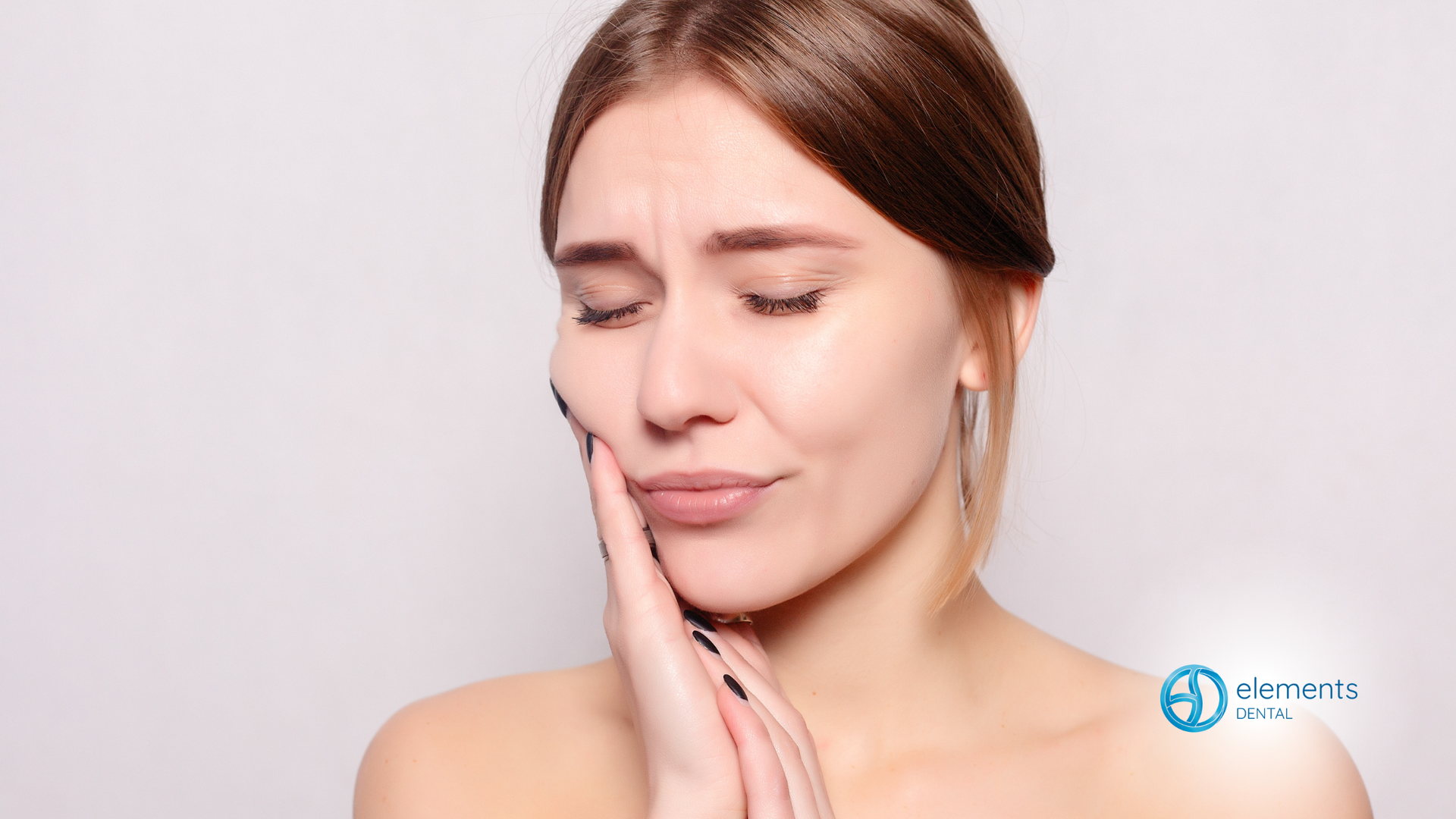
It often starts with something small. You run your tongue over a back tooth and feel a little dimple — a tiny crater that wasn't there before. Or you look closely in the mirror and notice small pits on the chewing surfaces, a glossy smoothness near the gumline, or edges of front teeth that look oddly transparent, almost see-through.
Most people assume: cavities. But often, it's something different — dental erosion. And erosion has a cause worth finding, because it can be a visible sign of something happening while you sleep.
Cavities vs. Erosion: What's the Difference?

Tooth decay is bacterial. Specific bacteria feed on sugars and produce acid that attacks very specific spots — typically in grooves and between teeth. Erosion is chemical. It's acid dissolving the enamel surface directly, no bacteria required — and it tends to leave a recognizable signature:
- Cupped-out pits and small craters on the chewing surfaces of back teeth
- Smooth, glossy, 'melted-looking' areas near the gumline
- Thinning, transparent edges on front teeth
- Flattened biting surfaces and increasing sensitivity to cold, heat, or sweet
Because enamel has no living cells, it can't regrow. Once it's dissolved, it's gone — which makes catching erosion early, and finding its source, far more valuable than simply patching the damage.
Where Is the Acid Coming From?

Some sources are well known: soft drinks (even sugar-free ones — the acid is the problem, not just the sugar), sports and energy drinks, citrus, wine, and vinegar-heavy foods. Sipping these slowly through the day is the worst pattern — every sip restarts an acid attack that lasts about 20–30 minutes.
But there's another acid source most people never connect to their teeth: stomach acid. Reflux (GERD), silent reflux, and frequent vomiting can all bathe teeth — especially the back and upper teeth — in acid powerful enough to dissolve enamel. And this is where the story takes a surprising turn.
The Missing Link: Your Airway at Night

Upper airway resistance syndrome (UARS) is a sleep-breathing condition in which the airway partially narrows during sleep. It's subtler than sleep apnea — breathing doesn't fully stop — but the body has to work harder all night to keep air moving. That struggle triggers brief micro-arousals (which you rarely remember), and it sets off a chain reaction:
- Reflux events. The extra effort of breathing against a narrowed airway creates pressure changes in the chest and abdomen that can pull stomach acid upward — especially when lying down.
- Mouth breathing. A compromised nasal airway pushes the body to breathe through the mouth at night.
- Dry mouth. Mouth breathing evaporates saliva — and saliva is your enamel's built-in defence, neutralizing acid and delivering minerals that repair early damage.
Put it together: while you sleep, acid is rising, saliva is disappearing, and your teeth are sitting unprotected in the perfect conditions for erosion. Night after night, year after year. This is why some patients with excellent hygiene and modest diets still develop pitted, worn, sensitive teeth — the damage is happening in the dark, and it isn't about brushing.
Self-Check: Could This Be You?

Patterns matter more than any single sign. Consider a closer look if you recognize several of these together:
- You wake with a dry mouth, sore throat, or hoarse voice
- You experience heartburn or reflux — at night or on waking
- Your teeth show pits, cupping, glossy wear, or growing sensitivity
- You wake unrefreshed, or rely on caffeine to feel normal by mid-morning
- You've been told you snore, breathe through your mouth, or grind your teeth
- You get frequent morning headaches
Worn or pitted teeth plus dry mouth plus poor sleep is a combination worth investigating — not with another filling, but with questions about your airway.
What Can Be Done?
The good news: once the pattern is recognized, it's very addressable. Protecting the teeth comes first — dietary acid strategies, remineralizing care, and restoring damaged areas with biocompatible materials where needed. But the real win is finding and addressing the source: screening for sleep-disordered breathing, coordinating reflux management, and where appropriate, exploring dental approaches that support a more open airway at night.
This is what a whole-person dental assessment is for. A fragmented approach treats each piece separately — the dentist patches the pits, the doctor treats the reflux, the sleep issue goes unnoticed. A comprehensive evaluation under one roof connects the dots: the teeth, the acid, the airway, and you.
Your Next Step

If either article sounded familiar — a dental experience that felt too narrow, or teeth that are wearing, pitting, or aching without a clear explanation — we'd love to take a whole-person look.
Book a comprehensive assessment at Elements Dental. One team, one location, one complete picture of your health — and a conversation that starts with listening.