
Why Tongue Cleaning Belongs in Your Daily Dental Routine
Source:
Dr. Marketing
You brush for two minutes. You floss. Maybe you even use mouthwash. Yet an hour later, your breath does not feel as fresh as you expected.
The problem may not be your teeth.
Run your tongue over your teeth after brushing and they probably feel smooth and clean. Now look at your tongue. Its surface is covered with tiny structures, grooves, and uneven areas where bacteria, food debris, and dead cells can collect. When that buildup is left behind, brushing your teeth alone may not address everything contributing to how clean your mouth feels.
Tongue cleaning takes only a few seconds, but it is one of the most commonly overlooked parts of an oral hygiene routine.
At Elements Dental in Downtown Victoria, we encourage patients to think beyond their teeth when caring for their mouths. Understanding what is happening on your tongue may change the way you approach your morning and nighttime routine.
Your Tongue Is Not a Smooth Surface

At first glance, your tongue may look relatively smooth. Up close, it is anything but.
Its surface contains numerous papillae, the small structures that give the tongue its characteristic texture. These structures are important for normal function, but the irregular surface also creates places where microorganisms and debris can accumulate.
This can contribute to the coating you sometimes notice when you look at your tongue in the mirror.
The colour and appearance of a tongue can vary, and a temporary coating does not automatically mean something is wrong. However, routinely cleaning the tongue can help remove some of the material collecting on its surface.
Think about it this way: brushing cleans the surfaces your toothbrush reaches. Flossing addresses areas between teeth. Cleaning the tongue addresses another large surface inside the mouth that would otherwise be skipped.
Is Your Tongue the Reason Your Breath Still Smells?

Not every toothache requires emergency treatment, but persistent or severe dental pain should not be ignored.
A tooth can hurt for many reasons, including decay, a crack, an infection, inflammation inside the tooth, or a problem involving the surrounding gums. Pain that keeps you awake, interferes with eating, becomes stronger, or continues despite basic pain management deserves attention.
You should also pay attention to what accompanies the toothache.
Swelling, a bad taste in the mouth, tenderness when biting, fever, or a pimple-like bump on the gums may indicate that something more than temporary sensitivity is occurring.
Pain is your warning sign. Treating the underlying cause is more important than repeatedly trying to quiet the symptom.
Tooth Pain Getting Harder to Ignore?
You do not have to wait for severe pain before calling. If a toothache is persistent or getting worse, contact Elements Dental in Downtown Victoria to find out how soon it should be evaluated.
What Exactly Are You Removing When You Clean Your Tongue?
This is where tongue cleaning becomes more interesting than simply “making your breath fresher.”
The coating on the tongue can contain a mixture of bacteria, food debris, dead cells, and other material from the mouth. Leaving that material alone does not mean it stays isolated from your teeth and gums. Your tongue is constantly moving. It touches the teeth, palate, food, and saliva throughout the day.
Tongue cleaning is therefore not a replacement for brushing or flossing, but another way of reducing buildup within the mouth.
You may even notice the difference visually. Some people see less coating after adding regular tongue cleaning to their routine.
The goal is not to scrub until your tongue looks perfectly pink. Tongues naturally vary in colour and texture. Cleaning should be gentle rather than aggressive.
Can Cleaning Your Tongue Improve Your Sense of Taste?

There is another reason people sometimes notice their mouth feels different after cleaning their tongue: taste.
Your tongue plays a central role in taste perception. When a noticeable coating builds up, removing that surface debris may make the tongue feel cleaner and may influence how clearly some people perceive tastes.
That does not mean scraping your tongue will suddenly transform every meal. Taste is complex and involves your taste receptors, smell, saliva, nerves, and other factors.
Still, keeping the tongue reasonably clean supports an oral environment where its surface is not unnecessarily covered with accumulated debris.
And there is a practical bonus: once tongue cleaning becomes part of your routine, you may become more aware of changes in your tongue that you previously never noticed.
Toothbrush or Tongue Scraper: Which Should You Use?
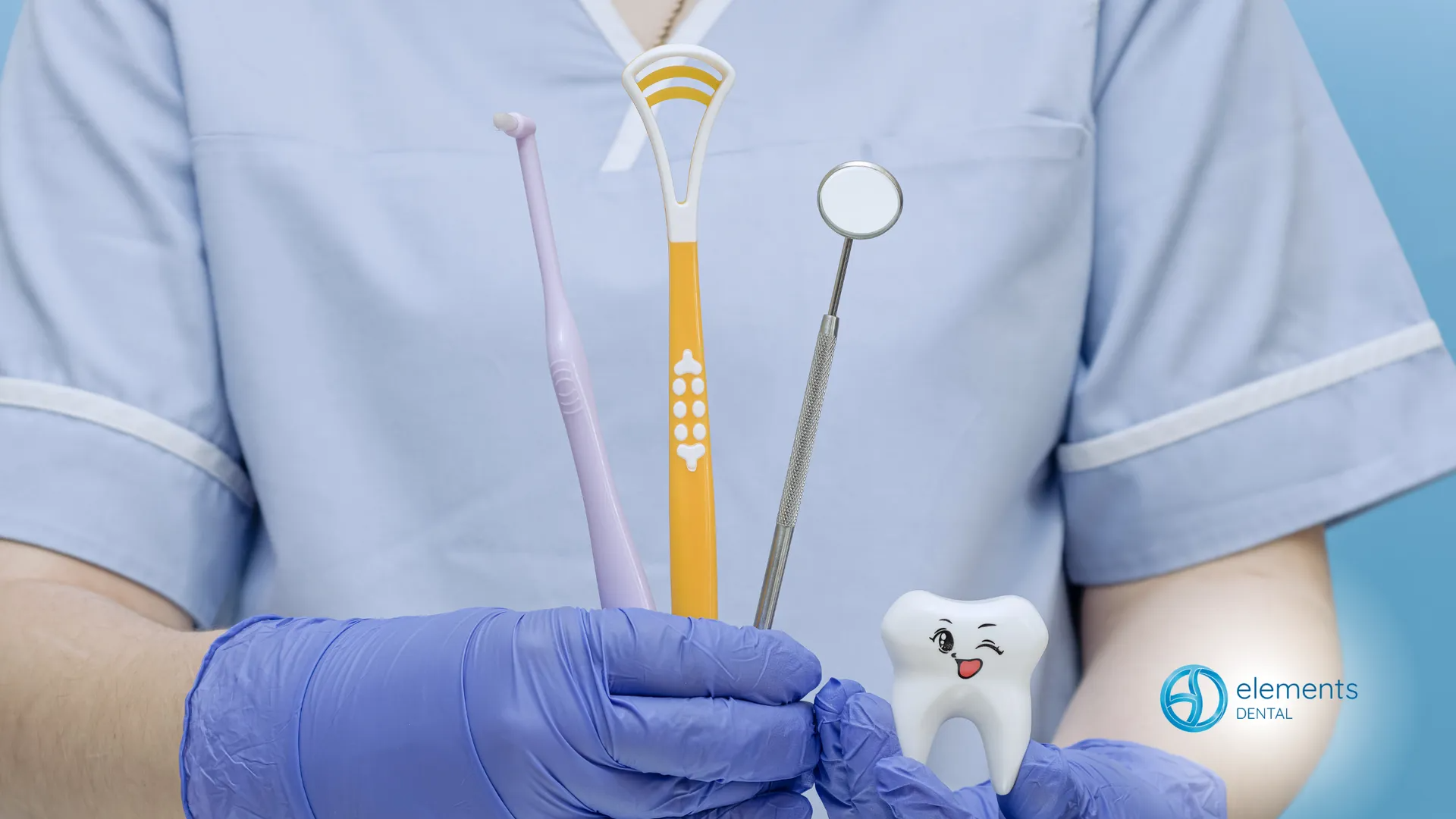
You do not necessarily need an elaborate tool.
The tongue can be cleaned gently using a toothbrush or a dedicated tongue scraper. A scraper is specifically shaped to move across the surface of the tongue and remove coating, while some people prefer simply incorporating tongue brushing into their existing routine.
Whichever method you choose, technique matters more than aggression.
Start farther back on the tongue without triggering your gag reflex, then gently move forward. Rinse the tool between passes. A few gentle passes are generally more sensible than repeatedly scraping the same area.
Avoid pressing so hard that the tongue becomes painful, irritated, or begins bleeding. Tongue cleaning should leave your mouth feeling cleaner, not leave your tongue sore.
Your Teeth Are Only Part of Your Oral Health
A preventive dental visit is an opportunity to discuss your entire oral hygiene routine, including brushing, flossing, tongue cleaning, and concerns such as persistent bad breath. Elements Dental in Downtown Victoria can help you build habits that make sense for your oral health needs.
Can You Clean Your Tongue Too Much?
Yes. More cleaning is not automatically better cleaning.
Once people see what comes off a tongue scraper, there can be a temptation to keep going until nothing appears on the tool. That is unnecessary.
Your tongue is living tissue, not a countertop that needs to be scrubbed spotless.
Aggressive or excessive scraping can irritate its surface. Gentle cleaning once as part of your regular oral hygiene routine may be enough for many people.
You should also avoid assuming that every unusual coating can simply be scraped away.
A tongue that remains unusually coated, becomes painful, develops persistent patches, changes colour significantly, bleeds without an obvious reason, or has a sore that does not heal deserves professional attention.
Sometimes what looks like an oral hygiene problem is not an oral hygiene problem at all.
Why Mouthwash Does Not Make Tongue Cleaning Unnecessary

Mouthwash can be useful depending on the product and your individual needs, but swishing liquid around your mouth is not the same as mechanically removing buildup from the tongue. The same principle applies to teeth.
Using mouthwash does not replace brushing plaque from tooth surfaces, just as rinsing your hands under water is different from actually washing them.
Tongue cleaning physically removes some of the coating sitting on the surface.
This is why a complete routine can involve different tools doing different jobs rather than searching for one product that does everything.
Brush your teeth appropriately. Clean between them. Clean your tongue gently. Follow any additional recommendations our team has made for your specific oral health needs.
The Missing 10 Seconds in Your Routine

Tongue cleaning does not need its own complicated routine.
After brushing, look in the mirror and gently clean from the back of the tongue toward the front. Rinse your toothbrush or scraper afterward. That is it.
The habit takes seconds.
What matters is consistency.
If you have been brushing and flossing regularly but completely ignoring your tongue, adding this small step can make your oral hygiene routine more complete. It may help reduce tongue coating, address one source of bad breath, and simply leave your mouth feeling fresher.
But tongue cleaning should complement professional dental care, not hide symptoms that keep returning.
If you regularly experience persistent bad breath, unusual tongue coating, discomfort, or other changes in your mouth, schedule an appointment with Elements Dental in Downtown Victoria. Sometimes the most useful part of improving your oral hygiene routine is finding out what has been missing.
Recent Posts